Easy Korean Winter Soup Recipes
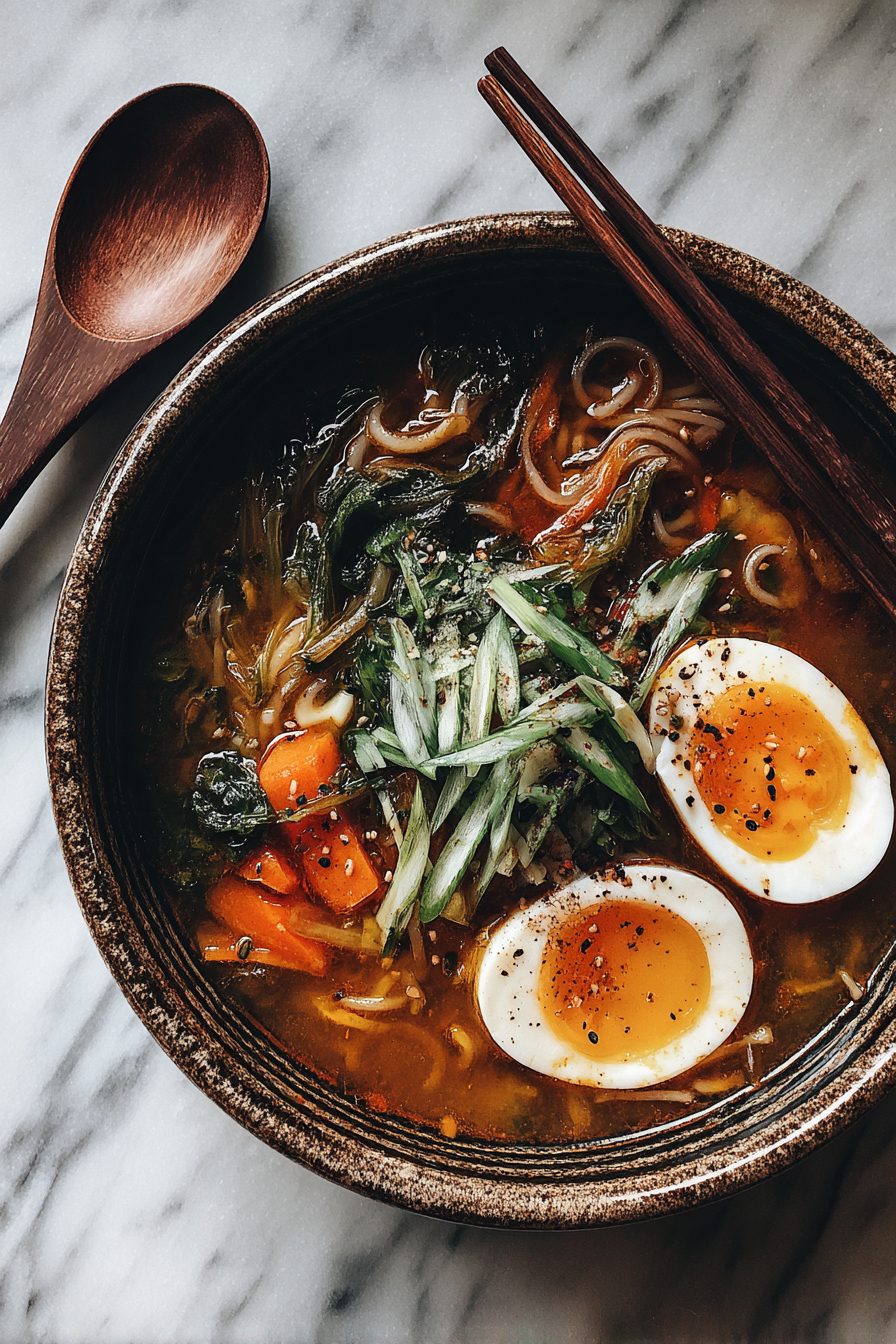
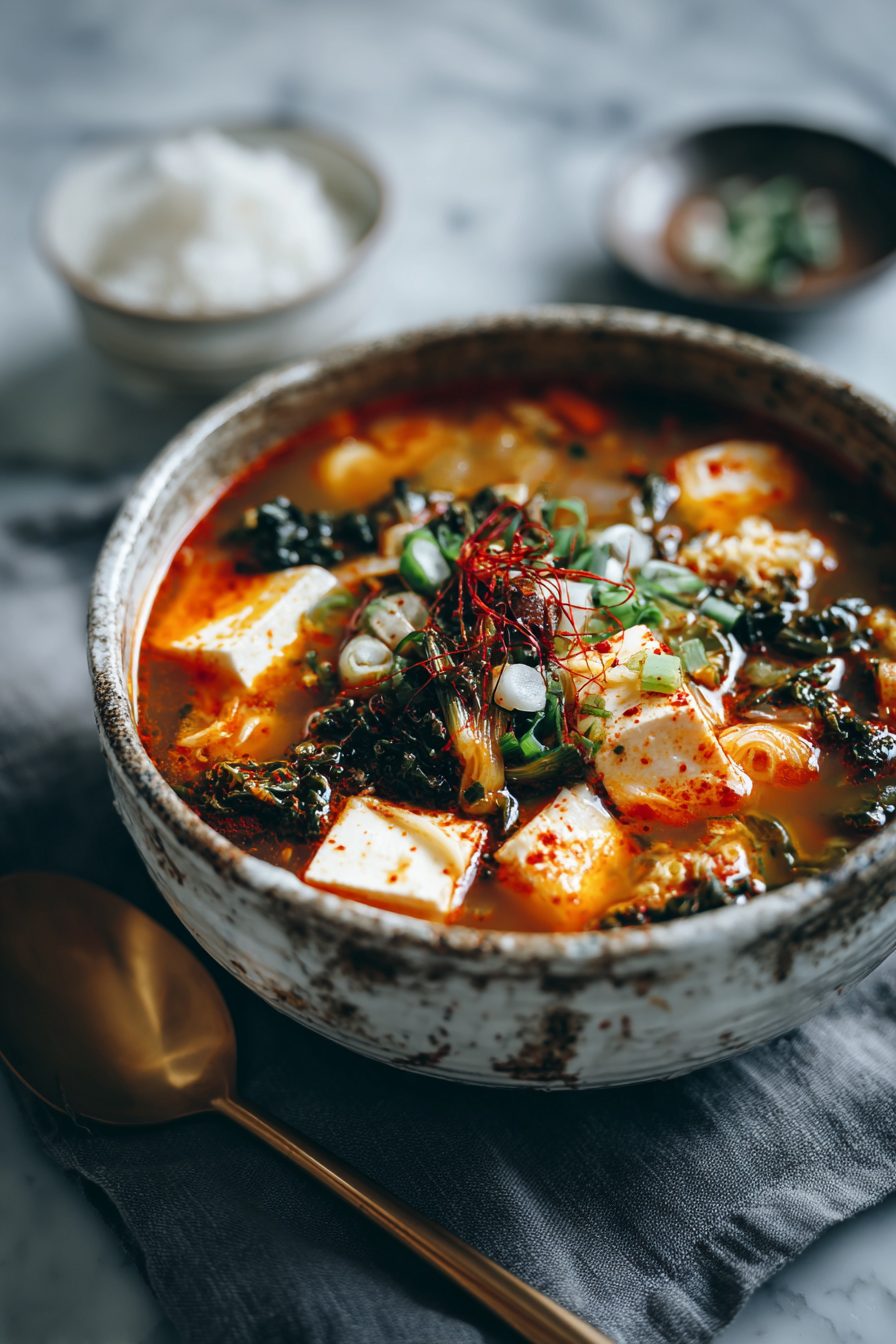
I make this soup when the world is gray and my hands need something warm to hold. It’s a simple, forgiving Korean-style winter soup — think cozy anchovy/kelp broth vibes, soft tofu, napa cabbage, a little gochujang heat, and scallions that wilt into everything like they belong there. It’s loud, comforting, and oddly humble; the kind of bowl that makes you sigh loud enough to scare the cat.
My husband calls it “the soup that fixes everything.” True story: once he came home soaked from a snowstorm, muttering about broken boots and a ruined day, and two bowls of this later he was telling me about his coworkers’ weird lunch habits. My kid calls it “brothy noodles but better” and insists on dunking leftover kimchi in it. It’s become a weekend staple and a last-minute savior on weeknights when the fridge is a “what can I salvage” situation.
Why You’ll Love This Easy Korean Winter Soup Recipes
– It’s warm and stupidly comforting without being heavy — perfect for grumpy weather and hangover mornings.
– Super flexible: tense day? Throw in frozen veggies and tofu. Feeling fancy? Add mushrooms or thinly sliced beef.
– Big-flavor from a few pantry staples (salted anchovy stock, gochujang, soy) — you’ll wonder why it took so long to learn this trick.
– Leftovers actually improve overnight as the flavors meld — if it survives that long.
Kitchen Talk



I’ll confess: I once burned the garlic because I was texting someone about a sale on mittens and walked away. The smell made the whole house hate dinner for an hour. My workaround? Add aromatics in stages — garlic later, onions earlier, and always keep a window open for smoked-sauce emergencies. I also accidentally tossed in a spoon of miso once when I was out of gochujang and it gave the soup a deeper, slightly nuttier body — weirdly good. This soup is forgiving, so experiment; it’ll forgive you.
Oh, these Korean winter soup recipes are an absolute lifesaver on a chilly evening! They're super straightforward, and the flavors are just so comforting and authentic. My family loved them, and I'll definitely be making these again and again.
MORE OF OUR FAVORITE…
Shopping Tips
– Vegetables: Pick a firm napa cabbage and a couple of small zucchini or daikon if you like crunch; avoid limp, brown-edged leaves.
– Protein: Silken or medium-firm tofu works great; choose tofu marked for soups or “soft” if you want it silky, or firmer if you plan to cube and simmer.
– Spices: Gochugaru or gochujang are the flavor backbone — gochujang gives depth and sweetness, gochugaru gives clean chili heat; don’t skip both if you can.
– Fresh Herbs: Scallions are essential for that popped-on-top brightness; pick the freshest bunch without slimy white ends.
– Specialty Item: Anchovy and kelp stock packets or dashi packs are worth buying — they save time and give the soup its umami soul.
Prep Ahead Ideas
– Chop napa, zucchini, mushrooms, and scallions the night before and store in airtight containers or zip bags in the fridge.
– Make the anchovy/kelp stock (or keep dashi packets on hand) and refrigerate; it keeps 3–4 days.
– Crumble or cube tofu and keep it in a sealed container; store-bought kimchi can be portioned out so you’re not opening the big jar every night.
– Tip: keep a jar of mixed aromatics (ginger, garlic, scallion) in the fridge for quick flavor boosts — lasts a couple days.
Time-Saving Tricks
– Use store-bought anchovy/kelp stock or instant dashi granules to skip the simmering step.
– Frozen vegetable mixes (napa + mushrooms + onion) are surprisingly decent and cut prep time in half.
– Use pre-sliced mushrooms and pre-crumbled tofu if you’re rushing; they still soak up flavor like champs.
– Don’t rush the resting time: let the soup sit 10 minutes off-heat so flavors settle — worth it.
Common Mistakes
– Overcooking tofu until it falls apart — it still tastes fine, but texture suffers; gently add tofu near the end.
– Adding gochujang straight into hot oil can splatter and burn; whisk it into a little stock first.
– Too-salty bowl: if your kimchi or stock is salty, skip added soy sauce and taste as you go.
– I once tried to “fix” a bland batch by dumping in salt — it turned metallic. Fix that by adding a splash of rice vinegar or a small spoon of sugar to rebalance.
What to Serve It With
– Steamed short-grain rice and a few banchan-style sides (kimchi, pickled cucumbers).
– A simple sesame cucumber salad or blanched spinach with sesame oil.
– Crispy pan-fried tofu or a quick scallion pancake for dunking.
– Toasted sesame seeds and extra scallions on top for crunch and brightness.
Tips & Mistakes
– Start with less salt and add at the end — kimchi and stock can surprise you.
– Use a wide pot so everything has room; crowded pots reduce caramelization.
– Don’t boil tofu aggressively; it’ll fall apart and look sad.
– If the soup tastes flat, a touch of vinegar or a squeeze of lemon wakes it up.
Storage Tips
Leftovers keep well in the fridge for 3–4 days in a sealed container. The broth will intensify overnight — not a crime, but you might need to cut it with a splash of water or extra stock when reheating. Cold? Honestly, it’s fine — some mornings I’ve eaten this straight from the fridge with rice for breakfast and felt like a very responsible adult.
Variations and Substitutions
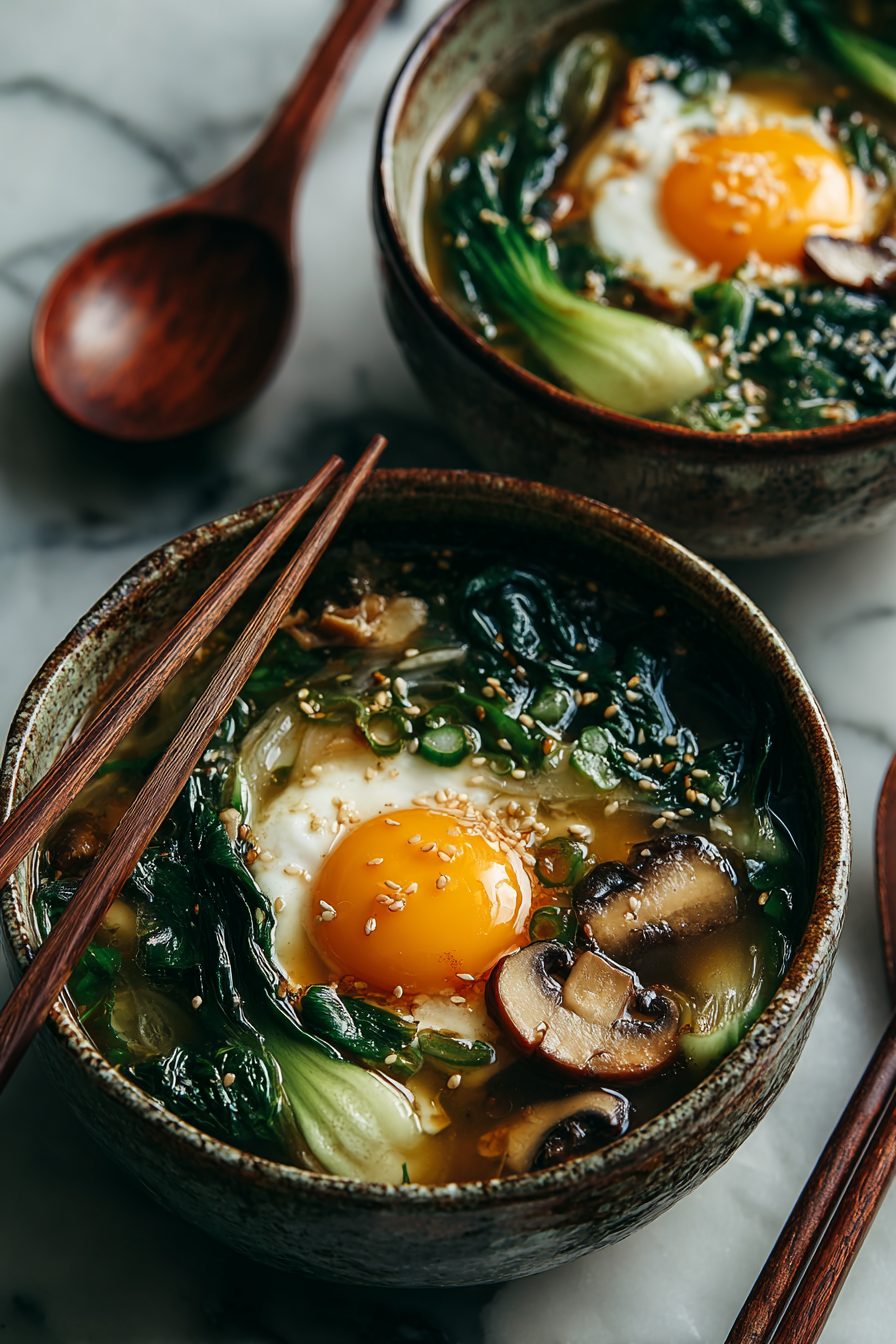
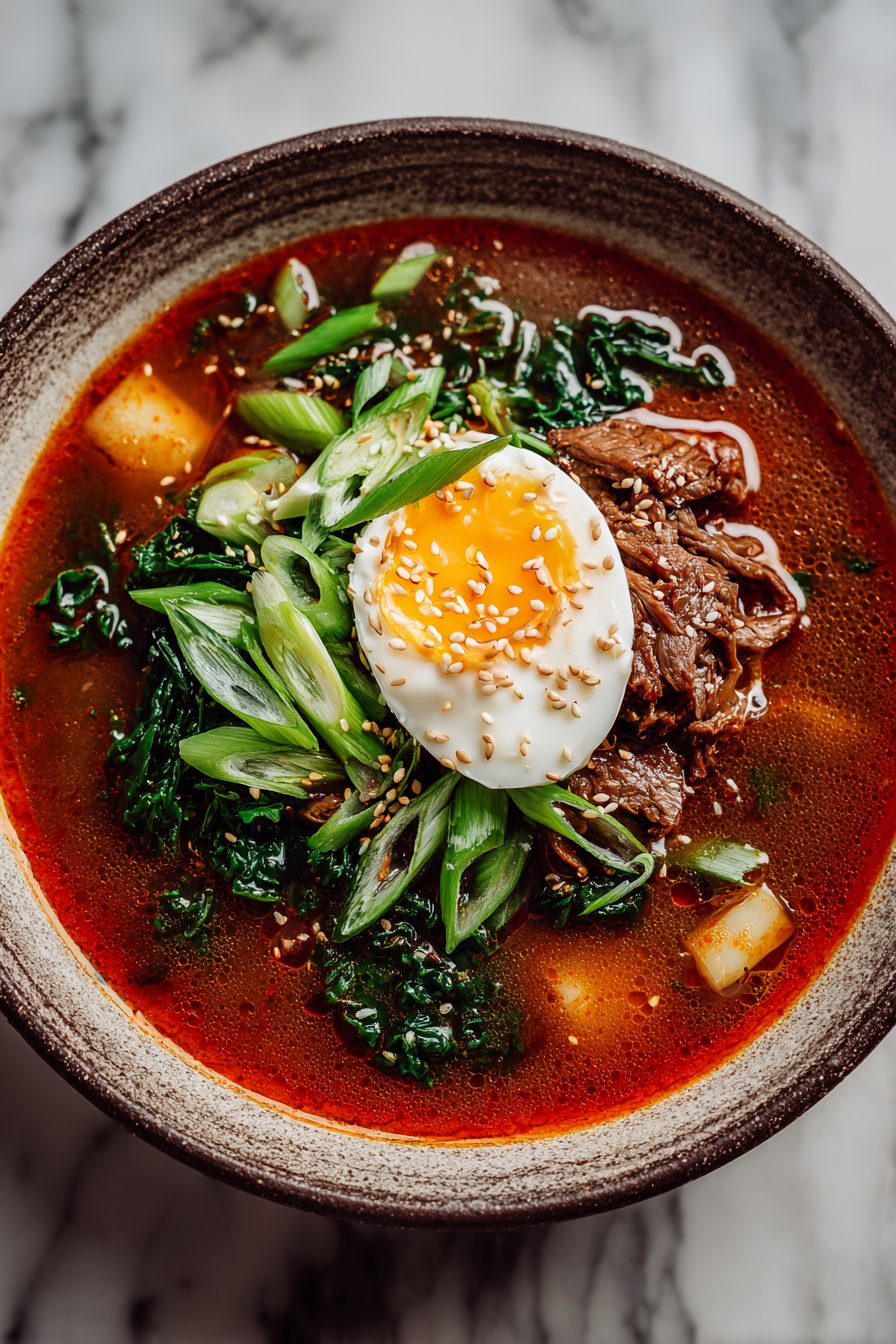
Swap gochujang for extra gochugaru + a touch of miso in a pinch. No tofu? Thinly sliced beef or pork works (add earlier so it cooks through). No anchovy stock? Use vegetable broth plus a splash of soy and a tiny piece of kombu if you have it. If you like it creamy, finish with a spoonful of tahini or a soft-boiled egg — I’ve done both on tired nights and lived to tell the tale.
Frequently Asked Questions
Easy Korean Winter Soup Recipes
Ingredients
Main Ingredients
- 1 tbsp neutral oil such as avocado or canola
- 1 cup diced yellow onion
- 3 tsp minced garlic
- 2 tsp grated fresh ginger
- 2 tsp Korean chili flakes (gochugaru) reduce for milder heat
- 1.5 tbsp gochujang chili paste
- 1.75 cup chopped napa kimchi well-fermented for best flavor
- 0.5 cup kimchi brine
- 2 cup sliced daikon radish about 1/2-inch pieces
- 4.5 cup low-sodium chicken or vegetable broth use veggie broth to keep it vegan
- 1.5 cup sliced mushrooms shiitake or cremini
- 14 oz soft or medium tofu, cubed
- 1.5 tbsp low-sodium soy sauce
- 1 tsp sugar balances acidity
- 1 tsp toasted sesame oil
- 0.5 tsp fine sea salt to taste
- 0.25 tsp ground black pepper
- 0.5 cup thinly sliced scallions plus extra for garnish
Instructions
Preparation Steps
- Heat the oil in a medium pot over medium heat.
- Sauté the onion until translucent, 3 to 4 minutes.
- Stir in the garlic and ginger and cook 30 seconds until fragrant.
- Toast the gochugaru and gochujang in the pot, stirring for 1 minute.
- Add the kimchi and daikon and cook 3 minutes to soften slightly.
- Pour in the kimchi brine and broth and bring to a boil.
- Season with soy sauce and sugar, then reduce to a gentle simmer.
- Simmer 12 to 15 minutes, until the daikon is tender.
- Slide in the mushrooms and tofu and simmer 5 minutes more.
- Finish with sesame oil and most of the scallions. Taste, then add salt and pepper.
- Ladle into bowls and garnish with the remaining scallions. Serve hot.
Notes
Featured Comments
“This warming recipe was so flavorful — the hearty really stands out. Thanks!”
“New favorite here — turned out amazing. hearty was spot on.”
“Super easy and absolutely loved! My family asked for seconds. Saving this one.”
“Impressed! Clear steps and family favorite results. Perfect for busy nights.”
“This hearty recipe was so flavorful — the comforting really stands out. Thanks!”
“Impressed! Clear steps and will make again results. Perfect for busy nights.”
“Impressed! Clear steps and will make again results. Perfect for busy nights.”
“Impressed! Clear steps and absolutely loved results. Perfect for busy nights.”
“New favorite here — family favorite. comforting was spot on.”
“This hearty recipe was turned out amazing — the comforting really stands out. Thanks!”