Homemade Mongolian Pork
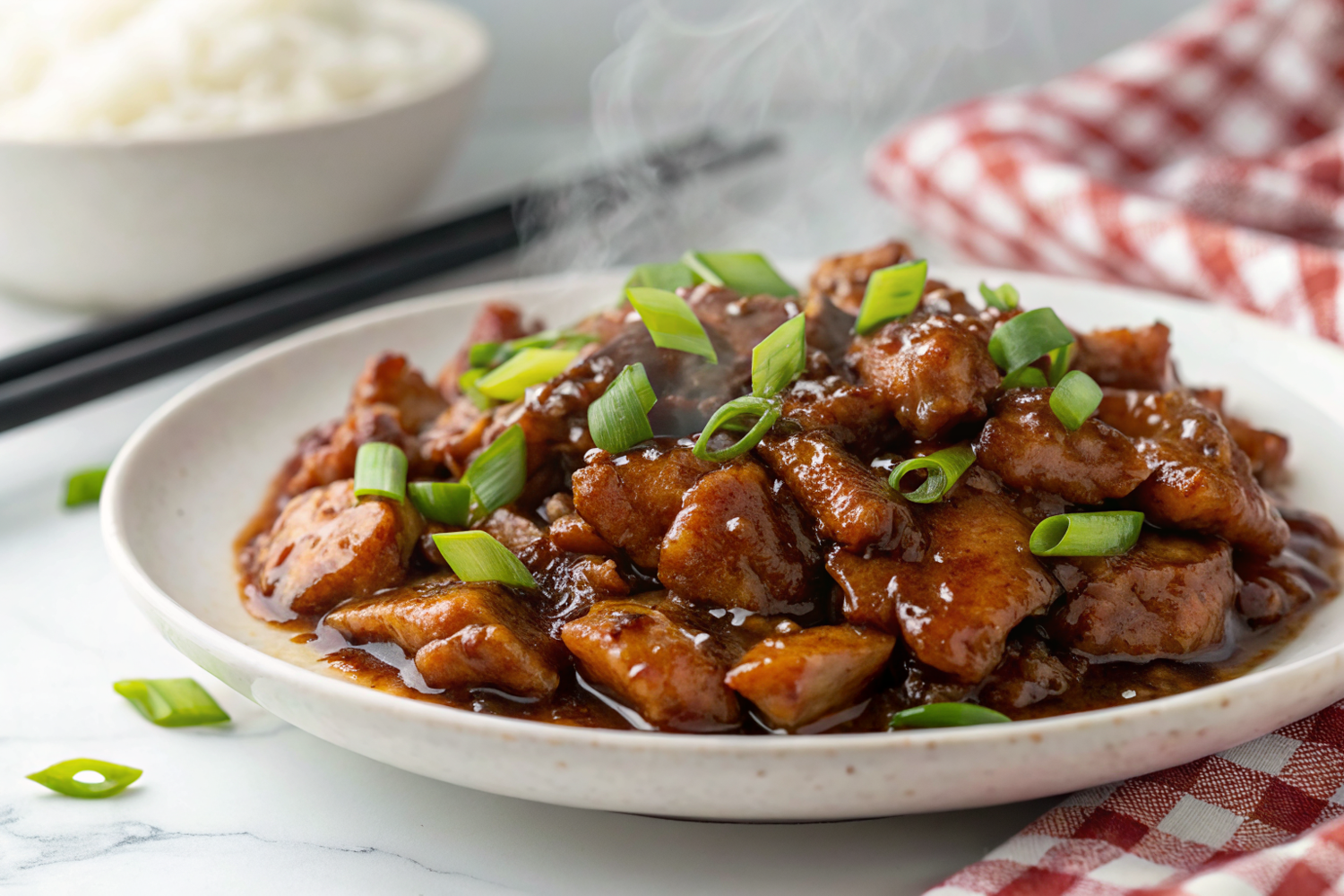
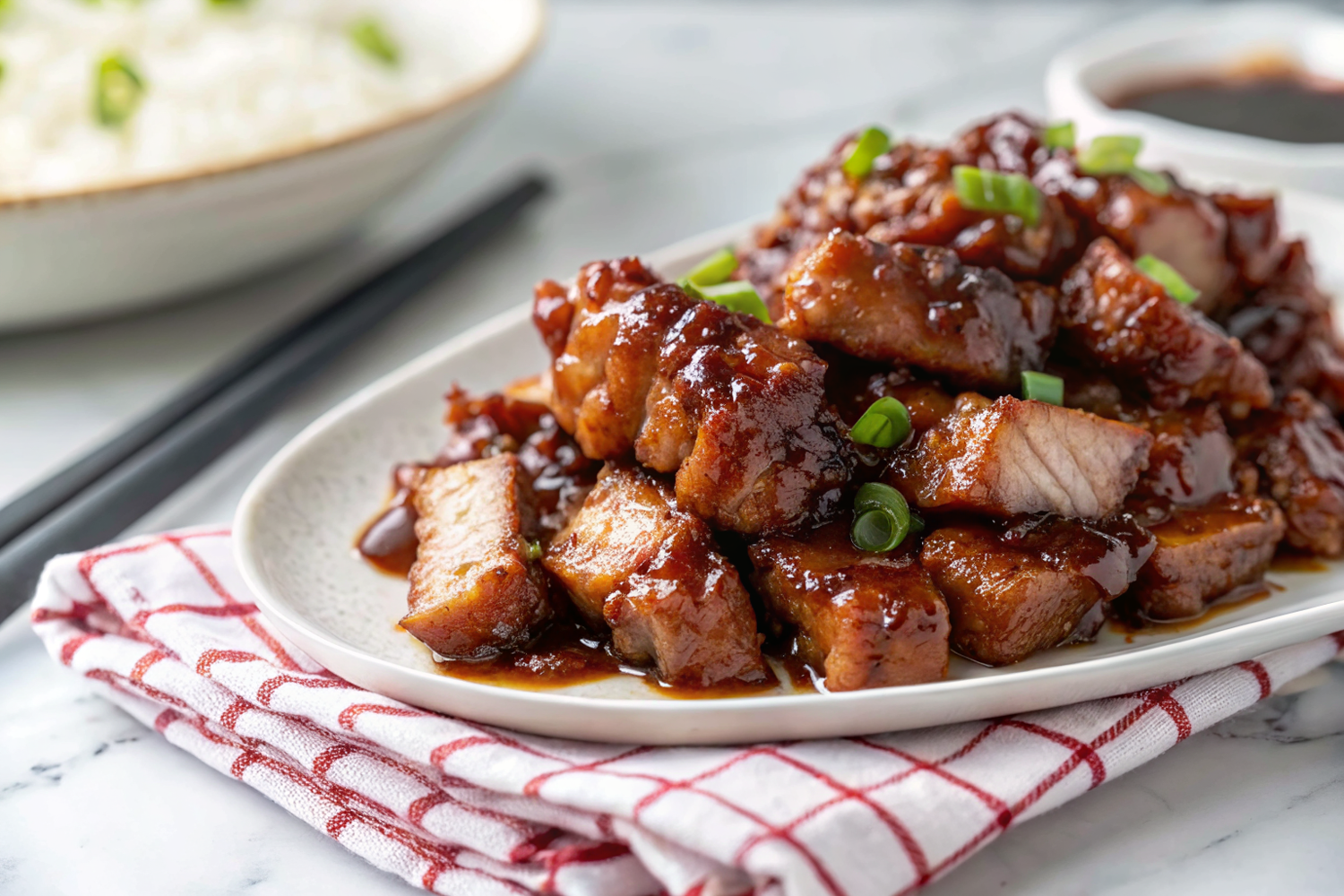
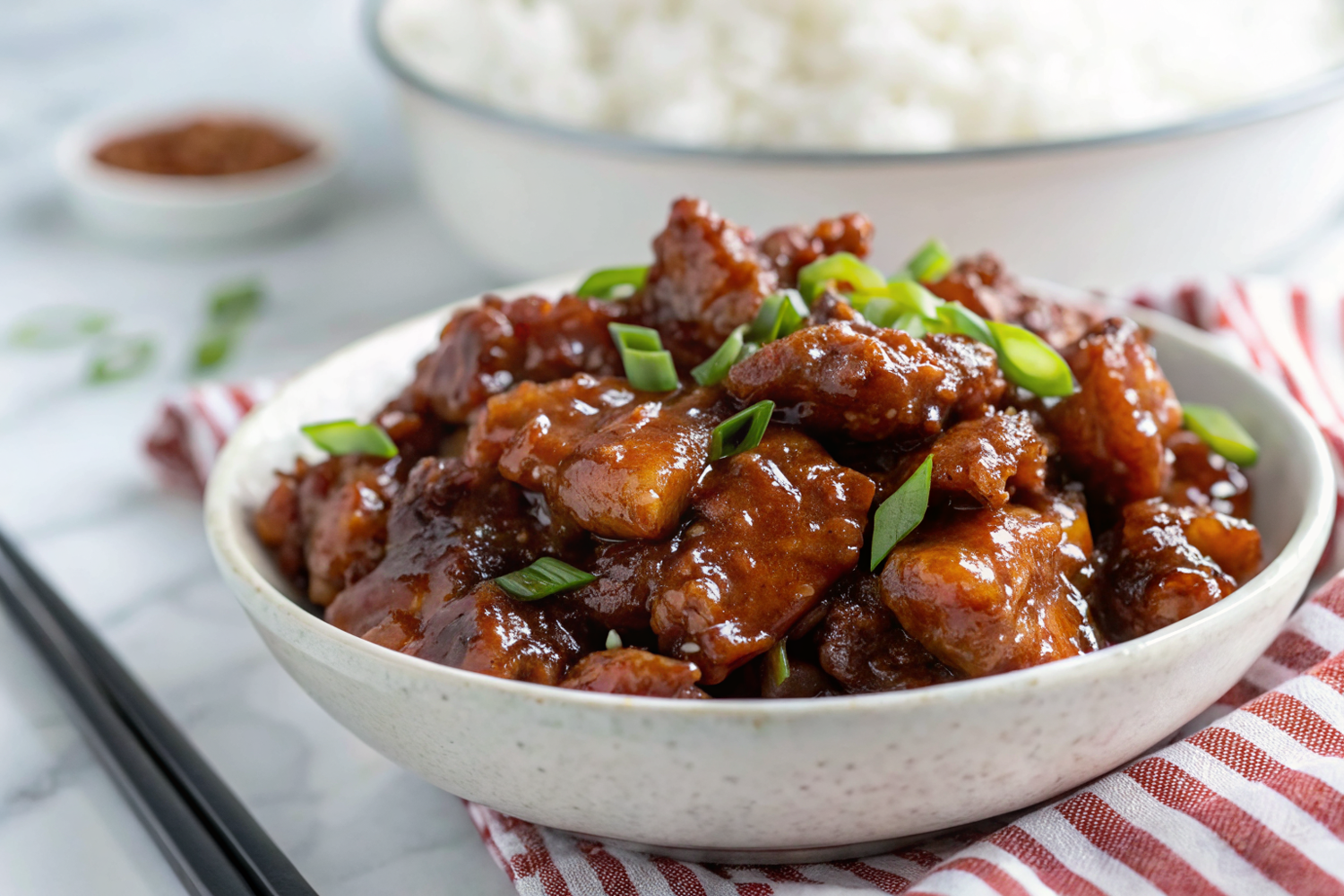
I make this Mongolian pork on purpose most nights when I need something sticky, salty, slightly sweet, and wildly forgiving — basically the food-equivalent of a good sweatpants day. It’s got a dark, glossy sauce that clings to thin strips of pork, a few scallions tossed in at the end for crunch and brightness, and enough leftover-ability to feed lunches for days. If you want comfort food that feels a little fancy but doesn’t require fuss, this is your new dinner cheat code.
My husband calls it “that sauce” and will eat it by the spoonful if I let him. Our kid? Between bites: “More green onions, please.” It started as a panic-weeknight scramble — fridge pork, pantry soy, pantry sugar — and then became the thing I pull out when friends come over or when I want to impress without actually trying. There was one winter when I made it three nights straight and my neighbor finally knocked to ask for the recipe. I gave her the half-truths, the improvisations, and the tip about not burning the garlic. She still sends me GIFs of a wok on fire every few months.
Why You’ll Love This Homemade Mongolian Pork
– Sauce that glues itself to every piece of pork — sticky, shiny, borderline irresistible.
– Uses pantry staples you probably already have: soy, sugar, garlic, and something starchy to thicken.
– Fast enough for weeknights but special enough for guests; leftovers reheat like a dream.
– Flexible: swap proteins, make it spicy or mild, and it still behaves like a champion.
Kitchen Talk
MORE EASY DINNER RECIPES...




This recipe taught me patience and also how little patience I actually have. The sauce needs a hot pan and quick tosses — work fast or the meat steams instead of sears. I once tried it with thick-cut pork shoulder and it turned into a slow-cooker thing (which was fine), but the thin strips? Chef’s kiss for weeknight speed. Also: don’t skip the cornstarch — it’s the difference between watery sadness and that glossy, clingy goodness. Oh, and I learned the hard way that too much sugar turns it into caramel-on-everything in under a minute.
MORE OF OUR FAVORITE…
Shopping Tips
– Protein: Look for pork tenderloin or pork shoulder sliced thin — tenderloin is leaner and cooks faster, shoulder has more flavor if you braise it.
– Fresh Herbs: Scallions (green onions) are the classic finish; choose bright, firm stalks and save the tops for garnish.
– Spices: Fresh garlic and ginger make a big difference here; if using powdered, add earlier so the flavor softens.
– Sweeteners: Brown sugar gives depth; if you only have granulated sugar, it still works but the flavor’s cleaner.
– Specialty Item: Soy sauce (or tamari for gluten-free) — low-sodium is a safe bet so you can control salt later.
Prep Ahead Ideas
– Slice the pork thinly and toss with a little cornstarch and soy the night before to save time; keep it covered in the fridge.
– Mix the sauce in a jar and store in the fridge so it’s ready to pour — saves two minutes that feel like twenty.
– Chop scallions and mince garlic/ginger into small containers; use airtight containers or small zipper bags to avoid smelly fridge drama.
– Doing this in the morning means dinnertime becomes three-minute assembly and a hot pan.
Time-Saving Tricks
– Use a hot wok or heavy skillet and cook in batches so the pork browns instead of steams — it’s faster overall even if you do two quick rounds.
– Buy pre-sliced pork or ask the butcher to slice it thin; otherwise freeze the pork for 20–30 minutes to make thin slicing easier.
– Make the sauce ahead and reheat with meat — no need to recreate it from scratch every time.
– Frozen peas or a bag of stir-fry veggies tossed at the end are awesome when you don’t have fresh produce.
Common Mistakes
– Burning the garlic: cook garlic over medium heat and add it toward the end of browning the pork, or it gets bitter fast. I did this once and had to dilute the whole pan with extra sauce and a splash of vinegar.
– Watery sauce: too much liquid or low heat — either reduce it down harder or whisk a little cornstarch with cold water and stir it in to thicken fast.
– Overcrowding the pan: results in steamed, grey meat. If the pan is crowded, meat won’t get that pretty sear — use two batches.
– Too salty: use low-sodium soy or make the sauce a touch sweeter to balance if it tastes aggressively salty.
What to Serve It With
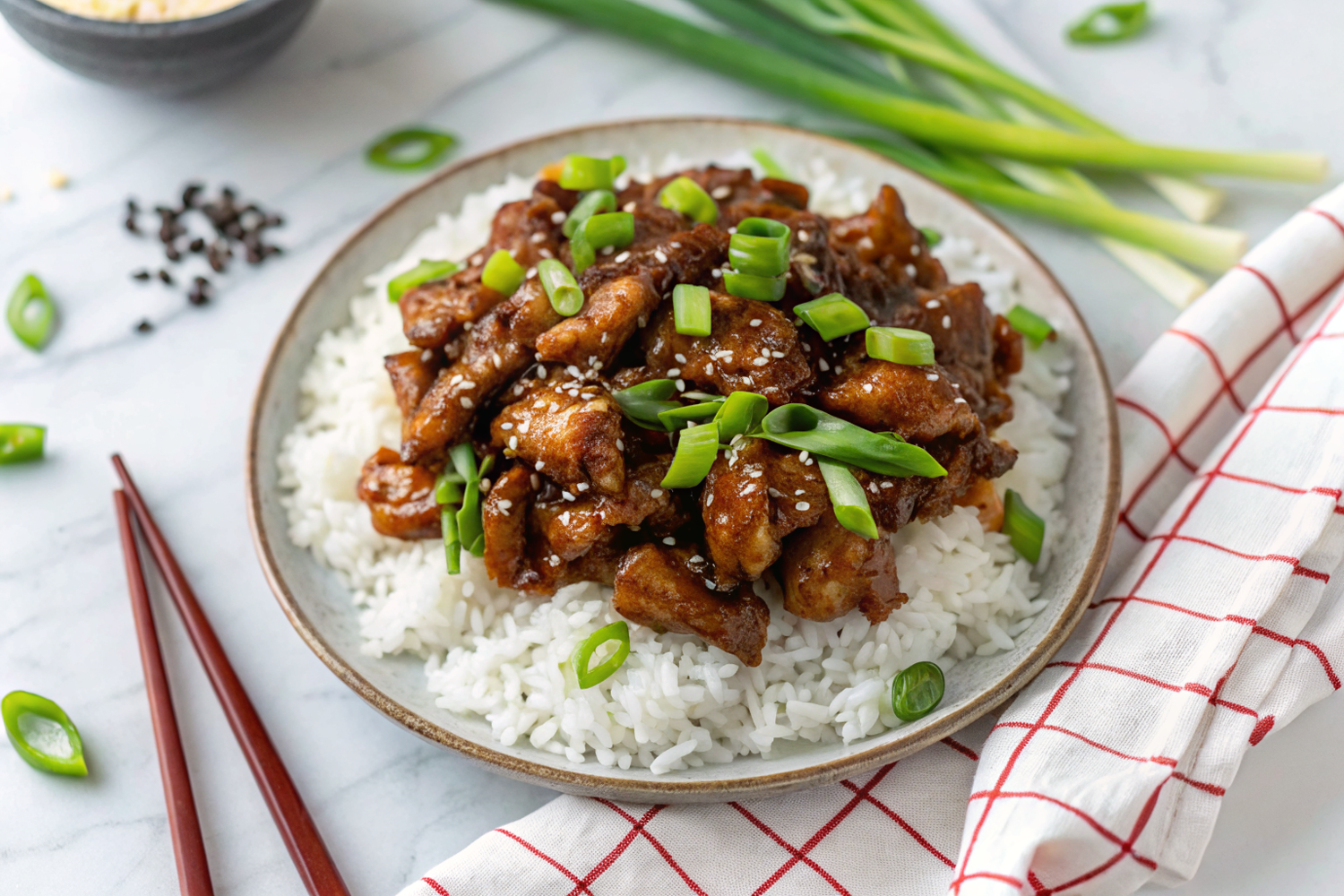
– Steamed white rice or jasmine rice — classic and soak-up-the-sauce necessary.
– Quick fried rice for leftovers with an extra egg and frozen peas.
– Sautéed bok choy or garlicky spinach to cut the sweetness with some green.
– Crunchy cucumber salad with rice vinegar for a bright contrast.
Tips & Mistakes
– Use high heat for a few quick tosses — that’s where the color and flavor live.
– Salt at the end after tasting because soy sauce already carries a ton of sodium.
– If the sauce is too sweet, whisk in a squeeze of lime or a splash of rice vinegar to brighten it.
– I once added honey mid-cook and everything went syrupy — add liquid sweeteners carefully and adjust heat.
Storage Tips
Leftovers live happily in an airtight container in the fridge for 3–4 days. Reheat gently in a skillet with a splash of water to loosen the sauce — microwave works fine too but the texture shifts a bit. Cold? Totally edible and not shameful; you can even throw it on toast for breakfast if you’re into savory leftovers (no judgment here).
Variations and Substitutions
– Swap pork for chicken thighs, flank steak, or firm tofu — adjust cooking time and treat tofu gently so it doesn’t fall apart.
– Tamari is a straight swap for soy sauce if you need gluten-free; fish sauce adds umami if you like a deeper flavor.
– Brown sugar ↔ honey: honey will be stickier and darker; use less and taste as you go.
– Cornstarch ↔ arrowroot for thickening; arrowroot can get stringy if overcooked, so add last.
– Add chilies, chili oil, or gochujang for a spicy kick — do this while the sauce reduces so flavors meld.
Frequently Asked Questions
Homemade Mongolian Pork
Ingredients
Pork and Coating
- 1 1/4 pounds pork tenderloin, very thinly sliced against the grain
- 1 teaspoon kosher salt
- 3/4 teaspoon freshly ground black pepper
- 1/4 cup cornstarch
- 1 tablespoon water (to help the coating cling)
- 1 1/2 tablespoons neutral oil (canola or vegetable), divided
Sauce and Aromatics
- 1/3 cup low-sodium soy sauce
- 2 tablespoons honey
- 1 1/2 tablespoons rice vinegar
- 2 teaspoons toasted sesame oil
- 2 tablespoons water
- 2 teaspoons minced garlic
- 1 1/2 teaspoons finely grated fresh ginger
- 1/4 teaspoon crushed red pepper flakes
- 3 green onions, thinly sliced, whites and greens separated
Instructions
Preparation Steps
- Make the sauce: In a small bowl, whisk together soy sauce, honey, rice vinegar, toasted sesame oil, 2 tablespoons water, and red pepper flakes. Set near the stove.
- Coat the pork: In a medium bowl, toss the sliced pork with salt, pepper, cornstarch, and 1 tablespoon water until every piece looks lightly frosted. Let it stand for 10 minutes while you heat the pan—this brief rest helps the coating adhere and the pork stay tender.
- Sear in batches: Heat 1 tablespoon of the neutral oil in a large (12-inch) skillet over medium-high until shimmering. Add half the pork in a single layer. Cook undisturbed for 1 minute to brown, then stir-fry 2 minutes more until just cooked through. Transfer to a plate. Add the remaining 1/2 tablespoon oil and repeat with the remaining pork.
- Aromatics: Return the empty skillet to medium heat. If the pan looks dry, swirl in a teaspoon more oil. Add the scallion whites, garlic, and ginger; stir-fry just until fragrant, about 30 seconds, scraping up any browned bits.
- Glaze: Pour in the prepared sauce and bring to a lively simmer. Cook 1 to 2 minutes, stirring, until slightly thickened and glossy. Return the pork and any juices to the pan and toss for 30 to 60 seconds to coat and heat through.
- Finish and serve: Remove from heat, fold in the scallion greens, and taste—add a splash more vinegar for brightness or salt to preference. Serve immediately over hot rice.
Notes
Featured Comments
“Made this last night and it was turned out amazing. Loved how the creamy came together.”
“This stacked recipe was turned out amazing — the al dente really stands out. Thanks!”
“Super easy and turned out amazing! My family asked for seconds. Saving this one.”
“Made this last night and it was so flavorful. Loved how the satisfying came together.”
“New favorite here — absolutely loved. crunchy was spot on.”
“New favorite here — absolutely loved. family-style was spot on.”
“Impressed! Clear steps and will make again results. Perfect for busy nights.”
“Super easy and turned out amazing! My family asked for seconds. Saving this one.”
“New favorite here — family favorite. warm was spot on.”
“This fruity recipe was family favorite — the satisfying really stands out. Thanks!”