Old Fashioned Custard Pie
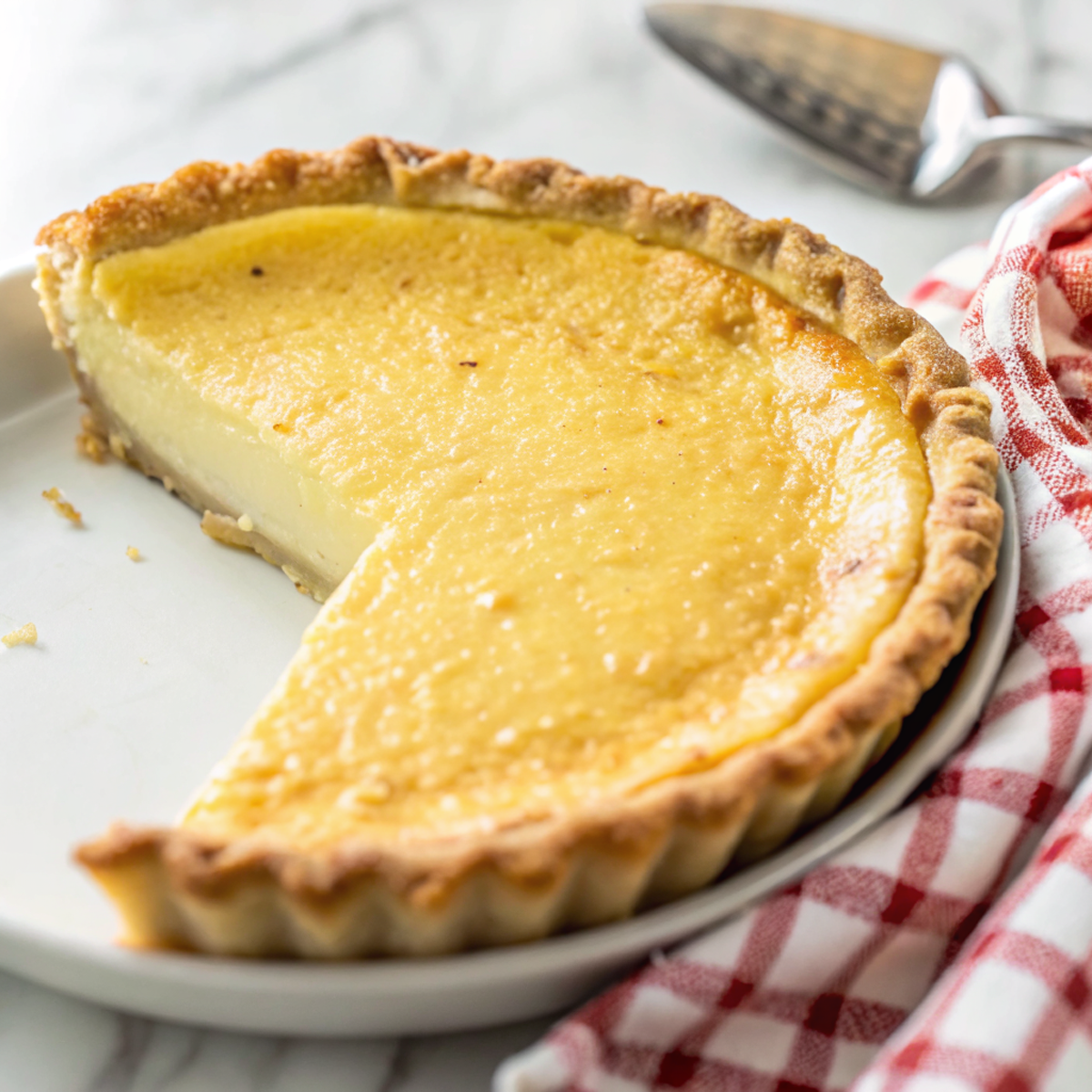
This is the kind of pie that smells like grandma’s kitchen and refuses to be fancy. Old-fashioned custard pie is simple: a flaky crust, a silky egg-and-milk custard, a whisper of vanilla and nutmeg, baked until it’s just set with a little jiggle in the middle. What makes it special is how little it needs to be delicious — no fuss, no weird ingredients, just comfort in slice form. If you like warm nostalgia and a dessert that’s somehow both humble and elegant, try this.
My husband calls it “the pie that fixes everything.” He will eat a whole corner while standing at the counter, napkin shoved in his back pocket like a gentleman pirate. It became our staple after a chaotic pandemic Sunday when everything else burned or soured and the custard pie came out golden and calm. Now birthdays, late-night apologies, and random Tuesdays all get solved with a slice.
Why You’ll Love This Old Fashioned Custard Pie
– It’s stupidly simple but tastes like you spent hours on it.
– Texture gold: smooth, custardy center with a little crisp from the edges.
– No exotic ingredients — your pantry can almost always pull this off.
– Great make-ahead dessert that gets better after a day in the fridge.
Kitchen Talk



I always forget to set the eggs out to warm up because I live my life at the last possible minute. Sometimes I blind-bake the crust for two minutes too long and swear at the oven, but that extra crisp edge? Not even mad. One time I swapped half-and-half for whole milk because we ran out of cream — the pie was still velvet-smooth, just a smidge lighter. Custard likes gentle heat and patience; if you rush it, you’ll get curdles. If you’re worried, bake low and check often.
MORE OF OUR FAVORITE…
Shopping Tips
– Eggs: Use large eggs for stable structure; fresher eggs give a cleaner custard flavor.
– Dairy: Whole milk or a mix of milk and cream makes the creamiest filling—don’t overreach with skim.
– Baking Basics (Flour/Sugar/Leaveners): If you’re making crust from scratch, all-purpose flour is fine; granulated sugar works in the custard.
– Fats & Oils: Use unsalted butter in the crust so you control the salt; browned butter is a fun splurge.
– Flavor Boosts (vanilla/zest): Real vanilla extract or a scraped vanilla bean changes everything; lemon zest can brighten the whole pie if you want a twist.
Prep Ahead Ideas
– Make the crust a day ahead and keep it wrapped in the fridge; it firms up and is easier to roll.
– Whisk the custard combination (eggs, sugar, milk) and store it covered in the fridge for a few hours — bring it to almost room temp before baking.
– Store fillings in airtight containers in the fridge; pie slices keep well in a shallow container for 3–4 days.
– Doing this makes weeknight dessert effortless: pop the prepped pie in the oven while you shower or set the table.
Time-Saving Tricks
– Use a store-bought crust when you’re in a hurry — still comfy, still tasty.
– Warm your milk gently on the stove instead of cold straight from the fridge so the eggs temper faster.
– If you have an electric whisk, use it for the sugar-and-egg mix to get silky quickly.
– Don’t rush the bake: low and slow saves you from custard that splits mid-slice.
Common Mistakes
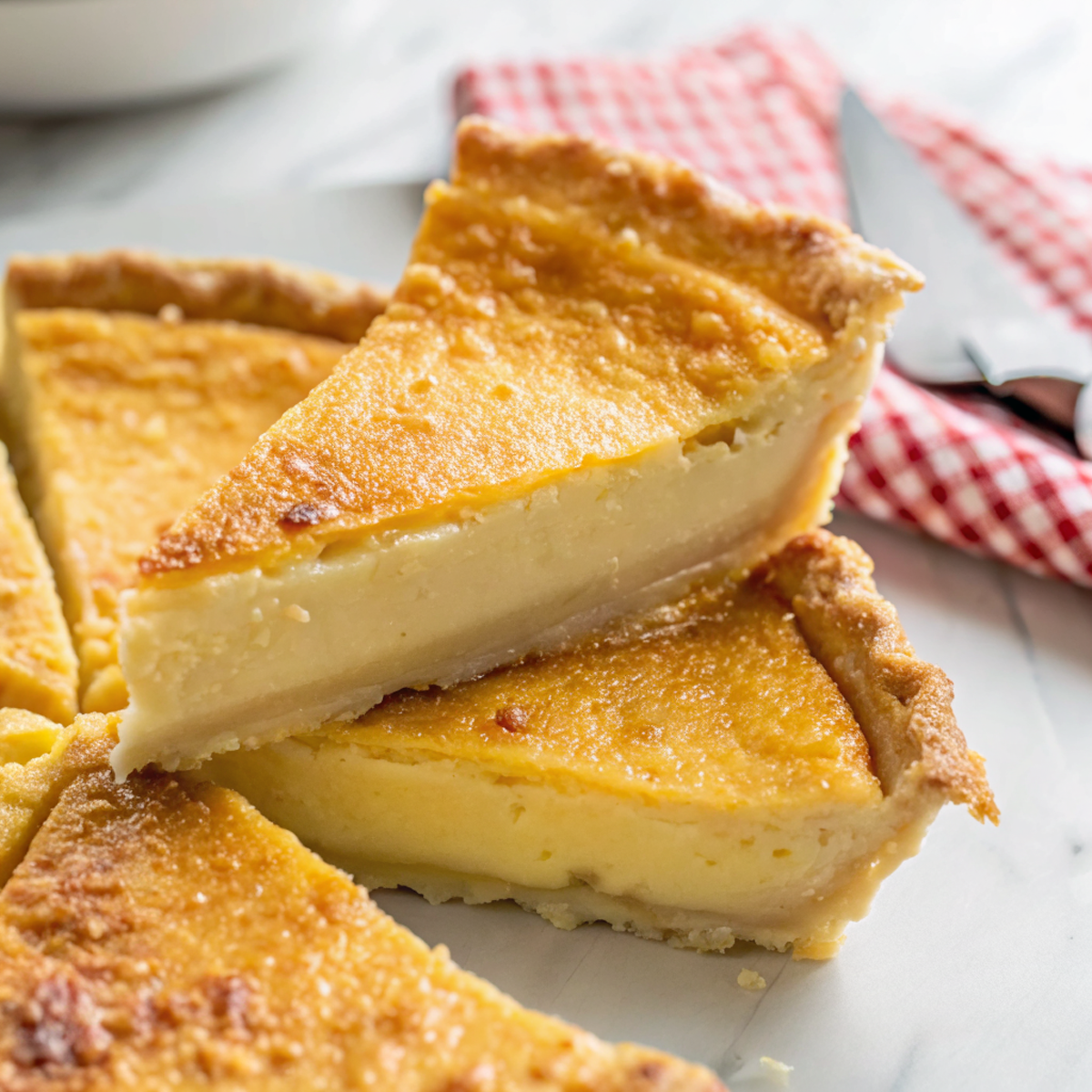
– Overbaking: It will firm up more as it cools; pull it when the center still has a slight wobble. I once left mine in five minutes too long and ended up with a dry top — rescue by covering loosely with foil and brushing with a tiny smear of cream to restore moisture.
– Temperature shock: Pouring cold custard into a hot crust can cause baking bubbles; warm the crust slightly or bring custard closer to room temp first.
– Not straining: I skipped a strain once and found tiny bits of cooked egg — lesson learned. Strain for ultra-smooth texture.
– Skipping the spice: A little nutmeg or cinnamon on top makes it sing; don’t be shy.
What to Serve It With
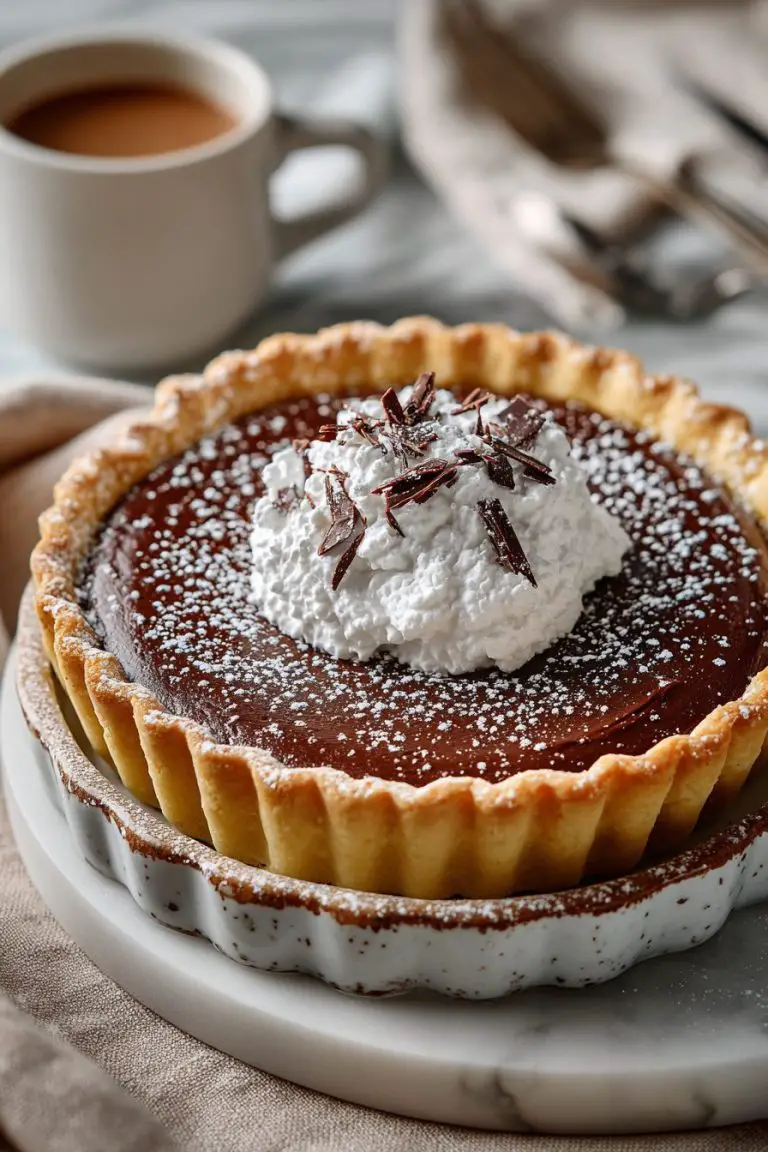
– A simple dusting of powdered sugar and freshly grated nutmeg.
– Spoonful of whipped cream or a dollop of plain yogurt to cut the sweetness.
– Fresh berries or a lightly dressed arugula salad for contrast.
– With coffee or a slice of crusty bread if you’re eating it for breakfast (no judgment).
Tips & Mistakes
– Low oven temp = gentle set; high temp = cracked, sad pie.
– Salt the crust lightly even if you use salted butter elsewhere.
– If the top browns too fast, tent with foil mid-bake.
– If it jiggles too much at the center after cooling, give it more time in the fridge — patience pays off.
Storage Tips
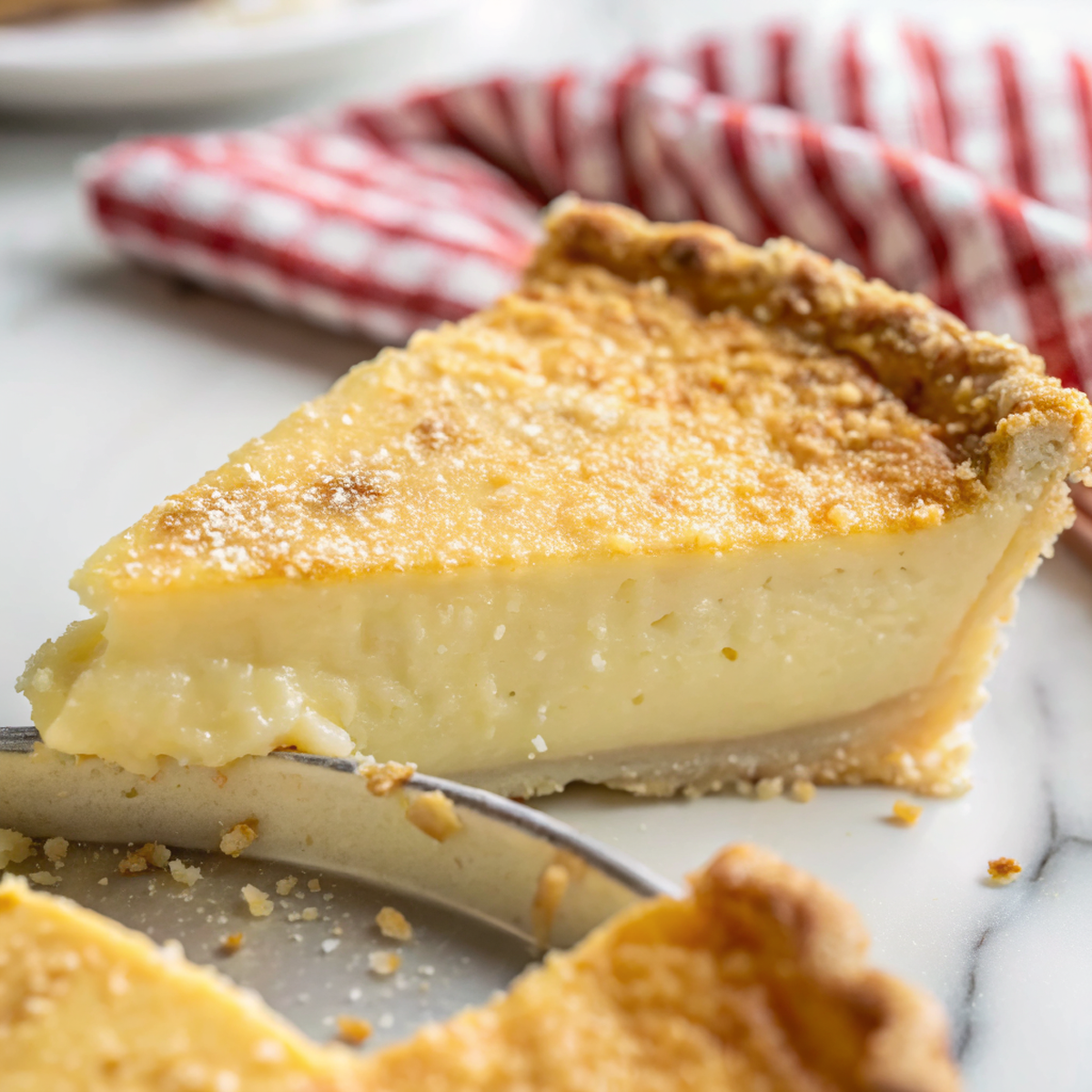
Leftovers live in the fridge wrapped or in an airtight container for about 3–4 days. Cold custard pie is perfectly acceptable for breakfast; it firms up and the flavor deepens, which I love. You can warm single slices briefly in a low oven (300°F / 150°C) for a few minutes if you miss that fresh-baked feel.
Variations and Substitutions
– Swap half the milk for cream for a richer custard, or use all milk for a lighter version.
– Add a tablespoon of bourbon or rum for grown-up depth.
– Citrus zest (lemon or orange) brightens the custard; grated nutmeg or cinnamon gives a warmer profile.
– Gluten-free crusts work fine—just watch blind-bake times. Avoid egg replacements if you want that classic set; the eggs are structural.
Frequently Asked Questions
Old Fashioned Custard Pie
Ingredients
For the Pie
- 1 9-inch unbaked pie shell
- 4 large eggs
- 2/3 cup granulated sugar
- 2 1/2 cups whole milk
- 1 tsp vanilla bean paste
- 1/8 tsp fine sea salt
- 1/4 tsp freshly grated nutmeg, divided
- 1/8 tsp ground cinnamon
Instructions
Preparation Steps
- Set a rimmed baking sheet on the center rack and preheat the oven to 325°F. Place the unbaked pie shell in the refrigerator to keep it cold while you prepare the custard.
- Warm the milk in a saucepan over medium-low heat until it’s steaming but not boiling, 3 to 5 minutes. Stir in the vanilla bean paste and cinnamon, turn off the heat, and let stand 5 minutes to infuse.
- In a mixing bowl, whisk the eggs, sugar, and salt just until the sugar begins to dissolve and the mixture looks smooth (avoid whipping in too much air). Whisk in half of the nutmeg.
- While whisking the egg mixture, slowly stream in the warm milk to temper. Pour the custard through a fine-mesh sieve into a large measuring jug. Tip: If any foam collects on top, skim it off for a smoother finish.
- Slide the hot baking sheet out just enough to set the chilled pie shell on it. Carefully pour the strained custard into the shell. Return the sheet to the oven.
- Bake at 325°F for 45 to 55 minutes, rotating the pie once halfway through. The custard is done when the edges are set, the center still has a gentle wobble, and an instant-read thermometer reads about 175°F in the middle. If the crust browns too quickly, loosely tent the rim with foil.
- Turn off the oven, crack the door, and let the pie rest inside for 10 minutes. Move to a rack and cool completely (about 2 hours). Dust the top with the remaining nutmeg before slicing. For the cleanest cuts, chill 1 hour before serving.
Notes
Featured Comments
“This homemade recipe was turned out amazing — the light really stands out. Thanks!”
“Made this last night and it was so flavorful. Loved how the vibrant came together.”
“New favorite here — family favorite. perfect pair was spot on.”
“This light recipe was so flavorful — the nutty really stands out. Thanks!”
“Impressed! Clear steps and absolutely loved results. Perfect for busy nights.”
“Impressed! Clear steps and turned out amazing results. Perfect for busy nights.”
“This grab-and-go recipe was absolutely loved — the warm really stands out. Thanks!”
“Impressed! Clear steps and will make again results. Perfect for busy nights.”
“Impressed! Clear steps and so flavorful results. Perfect for busy nights.”
“This shareable recipe was turned out amazing — the nutty really stands out. Thanks!”